
You are currently browsing the category archive for the ‘books’ category.
The lovely litte film was created for the New Zealand Book Council. Watch it.
I don’t know why I never thought to look this up on youtube before today, but there it was, in all it’s po-mo glory; Silverstein’s The Missing Piece Meets the Big O. It’s one my all time favourite children’s books and even after doing a Lacanian reading and analysis of it, it’s not ruined for me. Now I can share it with you:
I’m sick today and sick really sucks in my world. I don’t get sick often, the most poorly I feel is usually down to second day of menstruation ickiness which makes me wonder if I could sell my uterus on ebay. It’s produced two lovely loin fruits, I don’t see why it can’t go to someone who really needs it rather than hanging out with me. But I digress. I believe I’ve caught whatever the daughter had last week. It’s that kind of gut-wrenching, dehydrating, headache-inducing bug that I know will go away in a few hours with rest and soup but I go too long between viral bouts to really equip myself with the skills to deal with it and end up with a wonderful emotional cocktail comprised of 1 part frustration, 1 part discomfort, 1 part depression and 3 parts guilt. I really don’t have a lot to share with you beyond that and I’m tired of whinging about it so I’ll leave you with one of my favourite bits of one of my favourite books because the mindless busy work of typing it out has made me somewhat happy. Take some. Enjoy:
But I was talking about my first encounter with Belbo. We knew each other by sight, had exchanged a few words at Pilade’s, but I didn’t know much about him, only that he worked at Garamond Press, a small but serious publisher. I had come across a few Garamond books at the university.
“And what do you do?” he asked me one evening, as we were both leaning against the far end of the zinc bar, pressed close together by a festive crowd. He used the formal pronoun. In those days we all called one another by the familiar tu, even students and professors, even the clientele at Pilade’s. “Tu—buy me a drink,” a student wearing a parka would say to the managing editor of an important newspaper. It was like Moscow in the days of young Shklovski. We were all Mayakovskis, not one Zhivago among us. Belbo could not avoid the required tu, but he used it with pointed scorn, suggesting that although he was responding to vulgarity with vulgarity, there was still an abyss between acting intimate and being intimate. I heard him say tu with real affection only a few times, only to a few people: Dio-tallevi, one or two women. He used the formal pronoun with people he respected but hadn’t known long. He addressed me formally the whole time we worked together, and I valued that.
“And what do you do?” he asked, with what I now know was friendliness.
“In real life or in this theater?” I said, nodding at our surroundings.
“In real life.”
“I study.”
“You mean you go to the university, or you study?”
“You may not believe this, but the two need not be mutually exclusive. I’m finishing a thesis on the Templars.”
“What an awful subject,” he said. “I thought that was for lunatics.”
“No. I’m studying the real stuff. The documents of the trial. What do you know about the Templars, anyway?”
“I work for a publishing company. We deal with both lunatics and nonlunatics. After a while an editor can pick out the lunatics right away. If somebody brings up the Templars, he’s almost always a lunatic.”
“Don’t I know! Their name is legion. But not all lunatics talk about the Templars. How do you identify the others?”
“I’ll explain. By the way, what’s your name?”
“Casaubon.”
“Casaubon. Wasn’t he a character in Middlemarch?”
“I don’t know. There was also a Renaissance philologist by that name, but we’re not related.”
“The next round’s on me. Two more, Pilade. All right, then. There are four kinds of people in this world: cretins, fools, morons, and lunatics.”
“And that covers everybody?”
“Oh, yes, including us. Or at least me. If you take a good look, everybody fits into one of these categories. Each of us is sometimes a cretin, a fool, a moron, or a lunatic. A normal person is just a reasonable mix of these components, these four ideal types.”
“Idealtypen.”
“Very good. You know German?”
“Enough for bibliographies.”
“When I was in school, if you knew German, you never graduated. You just spent your life knowing German. Nowadays I think that happens with Chinese.”
“My German’s poor, so I’ll graduate. But let’s get back to your typology. What about geniuses? Einstein, for example?”
“A genius uses one component in a dazzling way, fueling it with the others.” He took a sip of his drink. “Hi there, beautiful,” he said. “Made that suicide attempt yet?”
“No,” the girl answered as she walked by. “I’m in a collective now.”
“Good for you,” Belbo said. He turned back to me. “Of course, there’s no reason one can’t have collective suicides, too.”
“Getting back to the lunatics.”
“Look, don’t take me too literally. I’m not trying to put the universe in order. I ‘m just saying what a lunatic is from the point of view of a publishing house. Mine is an ad-hoc definition.”
“All right. My round.”
“All right. Less ice, Pilade. Otherwise it gets into the bloodstream too fast. Now then: cretins. Cretins don’t even talk; they sort of slobber and stumble. You know, the guy who presses the ice cream cone against his forehead, or enters a revolving door the wrong way.”
“That’s not possible.”
“It is for a cretin. Cretins are of no interest to us: they never come to publishers’ offices. So let’s forget about them.”
“Let’s.”
“Being a fool is more complicated. It’s a form of social behavior. A fool is one who always talks outside his glass.”
“What do you mean?”
“Like this.” He pointed at the counter near his glass. “He wants to talk about what’s in the glass, but somehow or other he misses. He’s the guy who puts his foot in his mouth. For example, he says how’s your lovely wife to someone whose wife has just left him.”
“Yes, I know a few of those.”
“Fools are in great demand, especially on social occasions. They embarrass everyone but provide material for conversation. In their positive form, they become diplomats. Talking outside the glass when someone else blunders helps to change the subject. But fools don’t interest us, either. They’re never creative, their talent is all second-hand, so they don’t submit manuscripts to publishers. Fools don’t claim that cats bark, but they talk about cats when everyone else is talking about dogs. They offend all the rules of conversation, and when they really offend, they’re magnificent. It’s a dying breed, the embodiment of all the bourgeois virtues. What they really need is a Verdurin salon or even a chez Guermantes. Do you students still read such things?”
“I do.”
“Well, a fool is a Joachim Murat reviewing his officers. He sees one from Martinique covered with medals. ‘Vous etes negre?’ Murat asks. ‘Oui, mon general!’ the man answers. And Murat says: ‘Bravo, bravo, continuez!’ And so on. You follow me? Forgive me, but tonight I’m celebrating a historic decision in my life. I’ve stopped drinking. Another round? Don’t answer, you’ll make me feel guilty. Pilade!”
“What about the morons?”
“Ah. Morons never do the wrong thing. They get their reasoning wrong. Like the fellow who says all dogs are pets and all dogs bark, and cats are pets, too, and therefore cats bark. Or that all Athenians are mortal, and all the citizens of Piraeus are mortal, so all the citizens of Piraeus are Athenians.”
“Which they are.”
“Yes, but only accidentally. Morons will occasionally say something that’s right, but they say it for the wrong reason.”
“You mean it’s okay to say something that’s wrong as long as the reason is right.”
“Of course. Why else go to the trouble of being a rational animal?”
“All great apes evolved from lower life forms, man evolved from lower life forms, therefore man is a great ape.”
“Not bad. In such statements you suspect that something’s wrong, but it takes work to show what and why. Morons are tricky. You can spot the fool right away (not to mention the cretin), but the moron reasons almost the way you do; the gap is infinitesimal. A moron is a master of paralogism. For an editor, it’s bad news. It can take him an eternity to identify a moron. Plenty of morons’ books are published, because they’re convincing at first glance. An editor is not required to weed out the morons. If the Academy of Sciences doesn’t do it, why should he?”
“Philosophers don’t either. Saint Anselm’s ontological argument is moronic, for example. God must exist because I ^can conceive Him as a being perfect in all ways, including existence. The saint confuses existence in thought with existence in reality.”
“True, but Gaunilon’s refutation is moronic, too. I can think of an island in the sea even if the island doesn’t exist. He confuses thinking of the possible with thinking of the necessary.”
“A duel between morons.”
“Exactly. And God loves every minute of it. He chose to be unthinkable only to prove that Anselm and Gaunilon were morons. What a sublime purpose for creation, or, rather, for that act by which God willed Himself to be: to unmask cosmic mo-ronism.”
“We’re surrounded by morons.”
“Everyone’s a moron—save me and thee. Or, rather—I wouldn’t want to offend—save thee.”
“Somehow I feel that Godel’s theorem has something to do with all this.”
“I wouldn’t know, I’m a cretin. Pilade!”
“My round.”
“We’ll split it. Epimenides the Cretan says all Cretans are liars. It must be true, because he’s a Cretan himself and knows his countrymen well.”
“That’s moronic thinking.”
“Saint Paul. Epistle to Titus. On the other hand, those who call Epimenides a liar have to think all Cretans aren’t, but Cretans don’t trust Cretans, therefore no Cretan calls Epimenides a liar.”
“Isn’t that moronic thinking?”
“You decide. I told you, they are hard to identify. Morons can even win the Nobel prize.”
“Hold on. Of those who don’t believe God created the world in seven days, some are not fundamentalists, but of those who do believe God created the world in seven days, some are. Therefore, of those who don’t believe God created the world in seven days, some are fundamentalists. How’s that?”
“My God—to use the mot juste—I wouldn’t know. A moron-ism or not?”
“It is, definitely, even if it were true. Violates one of the laws of syllogisms: universal conclusions cannot be drawn from two particulars.”
“And what if you were a moron?”
“I’d be in excellent, venerable company.”
“You’re right. And perhaps, in a logical system different from ours, our moronism is wisdom. The whole history of logic consists of attempts to define an acceptable notion of moronism. A task too immense. Every great thinker is someone else’s moron.”
“Thought as the coherent expression of moronism.”
“But what is moronism to one is incoherence to another.”
“Profound. It’s two o’clock, Pilade’s about to close, and we still haven’t got to the lunatics.”
“I’m getting there. A lunatic is easily recognized. He is a moron who doesn’t know the ropes. The moron proves his thesis; he has a logic, however twisted it may be. The lunatic, on the other hand, doesn’t concern himself at all with logic; he works by short circuits. For him, everything proves everything else. The lunatic is all id6e fixe, and whatever he comes across confirms his lunacy. You can tell him by the liberties he takes with common sense, by his flashes of inspiration, and by the fact that sooner or later he brings up the Templars.”
“Invariably?”
“There are lunatics who don’t bring up the Templars, but those who do are the most insidious. At first they seem normal, then all of a sudden…”He was about to order another whiskey, but changed his mind and asked for the check. “Speaking of the Templars, the other day some character left me a manuscript on the subject. A lunatic, but with a human face. The book starts reasonably enough. Would you like to see it?”
“I’d be glad to. Maybe there’s something I can use.”
“I doubt that very much. But drop in if you have a spare half hour. Number 1, Via Sincere Renato. The visit will be of more benefit to me than to you. You can tell me whether the book has any merit.”
“What makes you trust me?”
“Who says I trust you? But if you come, I’ll trust you. I trust curiosity.”
A student rushed in, face twisted in anger. “Comrades! There are fascists along the canal with chains!”
“Let’s get them,” said the fellow with the Tartar mustache who had threatened me over Krupskaya. “Come on, comrades!” And they all left.
“What do you want to do?” I asked, feeling guilty. “Should we go along?”
“No,” Belbo said. “Pilade sets these things up to clear the place out. For my first night on the wagon, I feel pretty high. Must be the cold-turkey effect. Everything I’ve said to you so far is false. Good night, Casaubon.”
Now go read the book. It will change your life.
I’m sick today and sick really sucks in my world. I don’t get sick often, the most poorly I feel is usually down to second day of menstruation ickiness which makes me wonder if I could sell my uterus on ebay. It’s produced two lovely loin fruits, I don’t see why it can’t go to someone who really needs it rather than hanging out with me. But I digress. I believe I’ve caught whatever the daughter had last week. It’s that kind of gut-wrenching, dehydrating, headache-inducing bug that I know will go away in a few hours with rest and soup but I go too long between viral bouts to really equip myself with the skills to deal with it and end up with a wonderful emotional cocktail comprised of 1 part frustration, 1 part discomfort, 1 part depression and 3 parts guilt. I really don’t have a lot to share with you beyond that and I’m tired of whinging about it so I’ll leave you with one of my favourite bits of one of my favourite books because the mindless busy work of typing it out has made me somewhat happy. Take some. Enjoy:
But I was talking about my first encounter with Belbo. We knew each other by sight, had exchanged a few words at Pilade’s, but I didn’t know much about him, only that he worked at Garamond Press, a small but serious publisher. I had come across a few Garamond books at the university.
“And what do you do?” he asked me one evening, as we were both leaning against the far end of the zinc bar, pressed close together by a festive crowd. He used the formal pronoun. In those days we all called one another by the familiar tu, even students and professors, even the clientele at Pilade’s. “Tu—buy me a drink,” a student wearing a parka would say to the managing editor of an important newspaper. It was like Moscow in the days of young Shklovski. We were all Mayakovskis, not one Zhivago among us. Belbo could not avoid the required tu, but he used it with pointed scorn, suggesting that although he was responding to vulgarity with vulgarity, there was still an abyss between acting intimate and being intimate. I heard him say tu with real affection only a few times, only to a few people: Dio-tallevi, one or two women. He used the formal pronoun with people he respected but hadn’t known long. He addressed me formally the whole time we worked together, and I valued that.
“And what do you do?” he asked, with what I now know was friendliness.
“In real life or in this theater?” I said, nodding at our surroundings.
“In real life.”
“I study.”
“You mean you go to the university, or you study?”
“You may not believe this, but the two need not be mutually exclusive. I’m finishing a thesis on the Templars.”
“What an awful subject,” he said. “I thought that was for lunatics.”
“No. I’m studying the real stuff. The documents of the trial. What do you know about the Templars, anyway?”
“I work for a publishing company. We deal with both lunatics and nonlunatics. After a while an editor can pick out the lunatics right away. If somebody brings up the Templars, he’s almost always a lunatic.”
“Don’t I know! Their name is legion. But not all lunatics talk about the Templars. How do you identify the others?”
“I’ll explain. By the way, what’s your name?”
“Casaubon.”
“Casaubon. Wasn’t he a character in Middlemarch?”
“I don’t know. There was also a Renaissance philologist by that name, but we’re not related.”
“The next round’s on me. Two more, Pilade. All right, then. There are four kinds of people in this world: cretins, fools, morons, and lunatics.”
“And that covers everybody?”
“Oh, yes, including us. Or at least me. If you take a good look, everybody fits into one of these categories. Each of us is sometimes a cretin, a fool, a moron, or a lunatic. A normal person is just a reasonable mix of these components, these four ideal types.”
“Idealtypen.”
“Very good. You know German?”
“Enough for bibliographies.”
“When I was in school, if you knew German, you never graduated. You just spent your life knowing German. Nowadays I think that happens with Chinese.”
“My German’s poor, so I’ll graduate. But let’s get back to your typology. What about geniuses? Einstein, for example?”
“A genius uses one component in a dazzling way, fueling it with the others.” He took a sip of his drink. “Hi there, beautiful,” he said. “Made that suicide attempt yet?”
“No,” the girl answered as she walked by. “I’m in a collective now.”
“Good for you,” Belbo said. He turned back to me. “Of course, there’s no reason one can’t have collective suicides, too.”
“Getting back to the lunatics.”
“Look, don’t take me too literally. I’m not trying to put the universe in order. I ‘m just saying what a lunatic is from the point of view of a publishing house. Mine is an ad-hoc definition.”
“All right. My round.”
“All right. Less ice, Pilade. Otherwise it gets into the bloodstream too fast. Now then: cretins. Cretins don’t even talk; they sort of slobber and stumble. You know, the guy who presses the ice cream cone against his forehead, or enters a revolving door the wrong way.”
“That’s not possible.”
“It is for a cretin. Cretins are of no interest to us: they never come to publishers’ offices. So let’s forget about them.”
“Let’s.”
“Being a fool is more complicated. It’s a form of social behavior. A fool is one who always talks outside his glass.”
“What do you mean?”
“Like this.” He pointed at the counter near his glass. “He wants to talk about what’s in the glass, but somehow or other he misses. He’s the guy who puts his foot in his mouth. For example, he says how’s your lovely wife to someone whose wife has just left him.”
“Yes, I know a few of those.”
“Fools are in great demand, especially on social occasions. They embarrass everyone but provide material for conversation. In their positive form, they become diplomats. Talking outside the glass when someone else blunders helps to change the subject. But fools don’t interest us, either. They’re never creative, their talent is all second-hand, so they don’t submit manuscripts to publishers. Fools don’t claim that cats bark, but they talk about cats when everyone else is talking about dogs. They offend all the rules of conversation, and when they really offend, they’re magnificent. It’s a dying breed, the embodiment of all the bourgeois virtues. What they really need is a Verdurin salon or even a chez Guermantes. Do you students still read such things?”
“I do.”
“Well, a fool is a Joachim Murat reviewing his officers. He sees one from Martinique covered with medals. ‘Vous etes negre?’ Murat asks. ‘Oui, mon general!’ the man answers. And Murat says: ‘Bravo, bravo, continuez!’ And so on. You follow me? Forgive me, but tonight I’m celebrating a historic decision in my life. I’ve stopped drinking. Another round? Don’t answer, you’ll make me feel guilty. Pilade!”
“What about the morons?”
“Ah. Morons never do the wrong thing. They get their reasoning wrong. Like the fellow who says all dogs are pets and all dogs bark, and cats are pets, too, and therefore cats bark. Or that all Athenians are mortal, and all the citizens of Piraeus are mortal, so all the citizens of Piraeus are Athenians.”
“Which they are.”
“Yes, but only accidentally. Morons will occasionally say something that’s right, but they say it for the wrong reason.”
“You mean it’s okay to say something that’s wrong as long as the reason is right.”
“Of course. Why else go to the trouble of being a rational animal?”
“All great apes evolved from lower life forms, man evolved from lower life forms, therefore man is a great ape.”
“Not bad. In such statements you suspect that something’s wrong, but it takes work to show what and why. Morons are tricky. You can spot the fool right away (not to mention the cretin), but the moron reasons almost the way you do; the gap is infinitesimal. A moron is a master of paralogism. For an editor, it’s bad news. It can take him an eternity to identify a moron. Plenty of morons’ books are published, because they’re convincing at first glance. An editor is not required to weed out the morons. If the Academy of Sciences doesn’t do it, why should he?”
“Philosophers don’t either. Saint Anselm’s ontological argument is moronic, for example. God must exist because I ^can conceive Him as a being perfect in all ways, including existence. The saint confuses existence in thought with existence in reality.”
“True, but Gaunilon’s refutation is moronic, too. I can think of an island in the sea even if the island doesn’t exist. He confuses thinking of the possible with thinking of the necessary.”
“A duel between morons.”
“Exactly. And God loves every minute of it. He chose to be unthinkable only to prove that Anselm and Gaunilon were morons. What a sublime purpose for creation, or, rather, for that act by which God willed Himself to be: to unmask cosmic mo-ronism.”
“We’re surrounded by morons.”
“Everyone’s a moron—save me and thee. Or, rather—I wouldn’t want to offend—save thee.”
“Somehow I feel that Godel’s theorem has something to do with all this.”
“I wouldn’t know, I’m a cretin. Pilade!”
“My round.”
“We’ll split it. Epimenides the Cretan says all Cretans are liars. It must be true, because he’s a Cretan himself and knows his countrymen well.”
“That’s moronic thinking.”
“Saint Paul. Epistle to Titus. On the other hand, those who call Epimenides a liar have to think all Cretans aren’t, but Cretans don’t trust Cretans, therefore no Cretan calls Epimenides a liar.”
“Isn’t that moronic thinking?”
“You decide. I told you, they are hard to identify. Morons can even win the Nobel prize.”
“Hold on. Of those who don’t believe God created the world in seven days, some are not fundamentalists, but of those who do believe God created the world in seven days, some are. Therefore, of those who don’t believe God created the world in seven days, some are fundamentalists. How’s that?”
“My God—to use the mot juste—I wouldn’t know. A moron-ism or not?”
“It is, definitely, even if it were true. Violates one of the laws of syllogisms: universal conclusions cannot be drawn from two particulars.”
“And what if you were a moron?”
“I’d be in excellent, venerable company.”
“You’re right. And perhaps, in a logical system different from ours, our moronism is wisdom. The whole history of logic consists of attempts to define an acceptable notion of moronism. A task too immense. Every great thinker is someone else’s moron.”
“Thought as the coherent expression of moronism.”
“But what is moronism to one is incoherence to another.”
“Profound. It’s two o’clock, Pilade’s about to close, and we still haven’t got to the lunatics.”
“I’m getting there. A lunatic is easily recognized. He is a moron who doesn’t know the ropes. The moron proves his thesis; he has a logic, however twisted it may be. The lunatic, on the other hand, doesn’t concern himself at all with logic; he works by short circuits. For him, everything proves everything else. The lunatic is all id6e fixe, and whatever he comes across confirms his lunacy. You can tell him by the liberties he takes with common sense, by his flashes of inspiration, and by the fact that sooner or later he brings up the Templars.”
“Invariably?”
“There are lunatics who don’t bring up the Templars, but those who do are the most insidious. At first they seem normal, then all of a sudden…”He was about to order another whiskey, but changed his mind and asked for the check. “Speaking of the Templars, the other day some character left me a manuscript on the subject. A lunatic, but with a human face. The book starts reasonably enough. Would you like to see it?”
“I’d be glad to. Maybe there’s something I can use.”
“I doubt that very much. But drop in if you have a spare half hour. Number 1, Via Sincere Renato. The visit will be of more benefit to me than to you. You can tell me whether the book has any merit.”
“What makes you trust me?”
“Who says I trust you? But if you come, I’ll trust you. I trust curiosity.”
A student rushed in, face twisted in anger. “Comrades! There are fascists along the canal with chains!”
“Let’s get them,” said the fellow with the Tartar mustache who had threatened me over Krupskaya. “Come on, comrades!” And they all left.
“What do you want to do?” I asked, feeling guilty. “Should we go along?”
“No,” Belbo said. “Pilade sets these things up to clear the place out. For my first night on the wagon, I feel pretty high. Must be the cold-turkey effect. Everything I’ve said to you so far is false. Good night, Casaubon.”
Now go read the book. It will change your life.
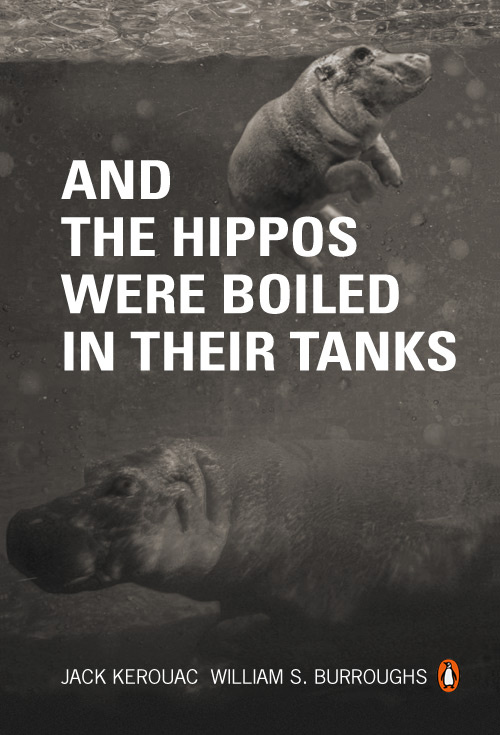
The work has been published and I’m a conflicted soul. Kerouac and Burroughs both felt the work to be sub-par and unworthy of publication but can’t very well argue from the grave now, can they? We selfish, living folk decided to go against the wills of two of the 20th century’s greatest creative minds and plublished their work posthumously. We trusted their judgement then, what happened? Pandora’s box has been opened and I feel that in owning this work I puts the blood on my hands, but in not owning it I would be missing out on that feeling of connectedness with something really special. The feeling I got sitting by Louisa May Alcott’s grave and experiencing the weight of history & utter loneliness bearing down on me whilst exploring West Kennet and its surrounding moors while chasing my Heathcliff. So do I put it on my wish list or do I honour their wishes and leave well enough alone? What’s a girl to do?
Oh, and if you’re interested you should check out what the always lovely Jaime The Nonist (RIP) has to say about it. He’s far more eloquent than yours truly. I have a huge nerdgirl crush on him.

I have that same Ikea bookshelf. It has served me well over many, many years. It has been everything from a computer desk/clothing storage in a small space (which worked out much better than one might expect) to a baker’s rack. It’s currently back to a bookshelf, hangin’ out in our hall collecting stuff:

Yes, I the DOF to highlight the plant and not the clutter, but you can still get a feel for just how hard this baby works. Even with the blur you can see sunscreen, stoneware candle holders, tin can candle holders (made by the daughter 4 years ago), laundry detergent, DVDs, kids school pictures, a hair ornament, my bill payment thingy, pencils, a spray of fake sunflowers the daughter decorated it with almost 5 years ago and which we have never taken off, kids school pictures, vaseline (even books need lube) and a cute, felted, teal cloche.
What you can’t see are all of the books, the candelabra, my sharpie collection, a collection of Things Which Do Not Belong To Us, 2 baskets containing hats & mitts & gloves, a candy jar, 3 sketchbooks, a pneumatically powered toy aeroplane, watercolour paints, oil pastels and a jar of seashells.
Needless to say it is not nearly as put together as the one in the first photo. How do these people do it? As much as ours looks like the aftermath of a tsunami on a daily basis, I still like it better. I know where everything is and I’ll never make the mistake of putting Proust next to Machiavelli in a tragic organization-by-colour mishap.
 I bought Kelly Rae Roberts’ book, Taking Flight, as a gift from me to me with love a couple of months ago. I don’t usually go for the self-help/warm fuzzy/new agey diy type books this one seemed to be but something made me want it so I toddled on down to Titles to order it and I’m glad I did. Although there is a lot of self-help/warm fuzzy/new agey diying in it there’s also a lot of practical information on the techniques she uses as well as the inspiration she draws from to make her art happen. She also goes off (but not too far off) on a decidedly journalistic bent in getting the stories, techniques and sources of inspiration from 7 other artists and wends everything back to the source in a true feat of storytelling. I don’t know if her editor is super-human or if Kelly herself is just that good but at the end of the day she has produced a wonderful little book about creating around what one knows and how to go about doing it. I’m genuinely happy I have it.
I was going to comment on recent verbal diarrhea spewed about arts funding by our man on the hill, but Margaret did it for me.
Click here to read her response.
I still think this is all fueled by Harper’s sick need for revenge against that hot band nerd who turned him down as a date to the prom in high school.
 cushti