
You are currently browsing the category archive for the ‘pop’ category.


All images via V Magazine.
I’ve had a few days to chew on these images, a sneak peek of V issue #63’s One Size Fits All article, and their attempt to break through the size barriers by showcasing the clothing on one ‘model-sized model’ (Jacqulyn Jablonski) and one ‘plus-sized model’ (Crystal Renn). I’m decidedly undecided about it, so I’ll leave you with my initial thoughts.
The good:
- The clothing: I love that all of these ensembles are unapologetically bold, bright, patterned, & skin bearing.
- The styling: both models look amazingly fresh and right now.
- The modelling: fierce + sultry. my favourite.
- The photography: so very, very clever.
- The models don’t appear to be that much different in size: I suppose this could be a bad point, but I appreciate that, even though there’s quite a large distance between their sizes, both bods are completely stunning (all of those LEGS! *drools*)
The bad:
- The comparison: while I suppose this could be a good thing, I feel like I’m forced to make the comparison in every image. I’m not allowed to just be happy about these beautiful clothes on beautiful women.
- The lack of variety: though the message is heard, it’s kind of a drop in the ocean. this shoot really only goes about a quarter of the way. a variety of models in a variety of shapes and sizes workin’ it the way these two do would make for better delivery.
All in all, I think it’s a good effort and I sincerely hope other vashion mags take their cue. What do you think?

I think it pretty much speaks for itself.
I’m sick today and sick really sucks in my world. I don’t get sick often, the most poorly I feel is usually down to second day of menstruation ickiness which makes me wonder if I could sell my uterus on ebay. It’s produced two lovely loin fruits, I don’t see why it can’t go to someone who really needs it rather than hanging out with me. But I digress. I believe I’ve caught whatever the daughter had last week. It’s that kind of gut-wrenching, dehydrating, headache-inducing bug that I know will go away in a few hours with rest and soup but I go too long between viral bouts to really equip myself with the skills to deal with it and end up with a wonderful emotional cocktail comprised of 1 part frustration, 1 part discomfort, 1 part depression and 3 parts guilt. I really don’t have a lot to share with you beyond that and I’m tired of whinging about it so I’ll leave you with one of my favourite bits of one of my favourite books because the mindless busy work of typing it out has made me somewhat happy. Take some. Enjoy:
But I was talking about my first encounter with Belbo. We knew each other by sight, had exchanged a few words at Pilade’s, but I didn’t know much about him, only that he worked at Garamond Press, a small but serious publisher. I had come across a few Garamond books at the university.
“And what do you do?” he asked me one evening, as we were both leaning against the far end of the zinc bar, pressed close together by a festive crowd. He used the formal pronoun. In those days we all called one another by the familiar tu, even students and professors, even the clientele at Pilade’s. “Tu—buy me a drink,” a student wearing a parka would say to the managing editor of an important newspaper. It was like Moscow in the days of young Shklovski. We were all Mayakovskis, not one Zhivago among us. Belbo could not avoid the required tu, but he used it with pointed scorn, suggesting that although he was responding to vulgarity with vulgarity, there was still an abyss between acting intimate and being intimate. I heard him say tu with real affection only a few times, only to a few people: Dio-tallevi, one or two women. He used the formal pronoun with people he respected but hadn’t known long. He addressed me formally the whole time we worked together, and I valued that.
“And what do you do?” he asked, with what I now know was friendliness.
“In real life or in this theater?” I said, nodding at our surroundings.
“In real life.”
“I study.”
“You mean you go to the university, or you study?”
“You may not believe this, but the two need not be mutually exclusive. I’m finishing a thesis on the Templars.”
“What an awful subject,” he said. “I thought that was for lunatics.”
“No. I’m studying the real stuff. The documents of the trial. What do you know about the Templars, anyway?”
“I work for a publishing company. We deal with both lunatics and nonlunatics. After a while an editor can pick out the lunatics right away. If somebody brings up the Templars, he’s almost always a lunatic.”
“Don’t I know! Their name is legion. But not all lunatics talk about the Templars. How do you identify the others?”
“I’ll explain. By the way, what’s your name?”
“Casaubon.”
“Casaubon. Wasn’t he a character in Middlemarch?”
“I don’t know. There was also a Renaissance philologist by that name, but we’re not related.”
“The next round’s on me. Two more, Pilade. All right, then. There are four kinds of people in this world: cretins, fools, morons, and lunatics.”
“And that covers everybody?”
“Oh, yes, including us. Or at least me. If you take a good look, everybody fits into one of these categories. Each of us is sometimes a cretin, a fool, a moron, or a lunatic. A normal person is just a reasonable mix of these components, these four ideal types.”
“Idealtypen.”
“Very good. You know German?”
“Enough for bibliographies.”
“When I was in school, if you knew German, you never graduated. You just spent your life knowing German. Nowadays I think that happens with Chinese.”
“My German’s poor, so I’ll graduate. But let’s get back to your typology. What about geniuses? Einstein, for example?”
“A genius uses one component in a dazzling way, fueling it with the others.” He took a sip of his drink. “Hi there, beautiful,” he said. “Made that suicide attempt yet?”
“No,” the girl answered as she walked by. “I’m in a collective now.”
“Good for you,” Belbo said. He turned back to me. “Of course, there’s no reason one can’t have collective suicides, too.”
“Getting back to the lunatics.”
“Look, don’t take me too literally. I’m not trying to put the universe in order. I ‘m just saying what a lunatic is from the point of view of a publishing house. Mine is an ad-hoc definition.”
“All right. My round.”
“All right. Less ice, Pilade. Otherwise it gets into the bloodstream too fast. Now then: cretins. Cretins don’t even talk; they sort of slobber and stumble. You know, the guy who presses the ice cream cone against his forehead, or enters a revolving door the wrong way.”
“That’s not possible.”
“It is for a cretin. Cretins are of no interest to us: they never come to publishers’ offices. So let’s forget about them.”
“Let’s.”
“Being a fool is more complicated. It’s a form of social behavior. A fool is one who always talks outside his glass.”
“What do you mean?”
“Like this.” He pointed at the counter near his glass. “He wants to talk about what’s in the glass, but somehow or other he misses. He’s the guy who puts his foot in his mouth. For example, he says how’s your lovely wife to someone whose wife has just left him.”
“Yes, I know a few of those.”
“Fools are in great demand, especially on social occasions. They embarrass everyone but provide material for conversation. In their positive form, they become diplomats. Talking outside the glass when someone else blunders helps to change the subject. But fools don’t interest us, either. They’re never creative, their talent is all second-hand, so they don’t submit manuscripts to publishers. Fools don’t claim that cats bark, but they talk about cats when everyone else is talking about dogs. They offend all the rules of conversation, and when they really offend, they’re magnificent. It’s a dying breed, the embodiment of all the bourgeois virtues. What they really need is a Verdurin salon or even a chez Guermantes. Do you students still read such things?”
“I do.”
“Well, a fool is a Joachim Murat reviewing his officers. He sees one from Martinique covered with medals. ‘Vous etes negre?’ Murat asks. ‘Oui, mon general!’ the man answers. And Murat says: ‘Bravo, bravo, continuez!’ And so on. You follow me? Forgive me, but tonight I’m celebrating a historic decision in my life. I’ve stopped drinking. Another round? Don’t answer, you’ll make me feel guilty. Pilade!”
“What about the morons?”
“Ah. Morons never do the wrong thing. They get their reasoning wrong. Like the fellow who says all dogs are pets and all dogs bark, and cats are pets, too, and therefore cats bark. Or that all Athenians are mortal, and all the citizens of Piraeus are mortal, so all the citizens of Piraeus are Athenians.”
“Which they are.”
“Yes, but only accidentally. Morons will occasionally say something that’s right, but they say it for the wrong reason.”
“You mean it’s okay to say something that’s wrong as long as the reason is right.”
“Of course. Why else go to the trouble of being a rational animal?”
“All great apes evolved from lower life forms, man evolved from lower life forms, therefore man is a great ape.”
“Not bad. In such statements you suspect that something’s wrong, but it takes work to show what and why. Morons are tricky. You can spot the fool right away (not to mention the cretin), but the moron reasons almost the way you do; the gap is infinitesimal. A moron is a master of paralogism. For an editor, it’s bad news. It can take him an eternity to identify a moron. Plenty of morons’ books are published, because they’re convincing at first glance. An editor is not required to weed out the morons. If the Academy of Sciences doesn’t do it, why should he?”
“Philosophers don’t either. Saint Anselm’s ontological argument is moronic, for example. God must exist because I ^can conceive Him as a being perfect in all ways, including existence. The saint confuses existence in thought with existence in reality.”
“True, but Gaunilon’s refutation is moronic, too. I can think of an island in the sea even if the island doesn’t exist. He confuses thinking of the possible with thinking of the necessary.”
“A duel between morons.”
“Exactly. And God loves every minute of it. He chose to be unthinkable only to prove that Anselm and Gaunilon were morons. What a sublime purpose for creation, or, rather, for that act by which God willed Himself to be: to unmask cosmic mo-ronism.”
“We’re surrounded by morons.”
“Everyone’s a moron—save me and thee. Or, rather—I wouldn’t want to offend—save thee.”
“Somehow I feel that Godel’s theorem has something to do with all this.”
“I wouldn’t know, I’m a cretin. Pilade!”
“My round.”
“We’ll split it. Epimenides the Cretan says all Cretans are liars. It must be true, because he’s a Cretan himself and knows his countrymen well.”
“That’s moronic thinking.”
“Saint Paul. Epistle to Titus. On the other hand, those who call Epimenides a liar have to think all Cretans aren’t, but Cretans don’t trust Cretans, therefore no Cretan calls Epimenides a liar.”
“Isn’t that moronic thinking?”
“You decide. I told you, they are hard to identify. Morons can even win the Nobel prize.”
“Hold on. Of those who don’t believe God created the world in seven days, some are not fundamentalists, but of those who do believe God created the world in seven days, some are. Therefore, of those who don’t believe God created the world in seven days, some are fundamentalists. How’s that?”
“My God—to use the mot juste—I wouldn’t know. A moron-ism or not?”
“It is, definitely, even if it were true. Violates one of the laws of syllogisms: universal conclusions cannot be drawn from two particulars.”
“And what if you were a moron?”
“I’d be in excellent, venerable company.”
“You’re right. And perhaps, in a logical system different from ours, our moronism is wisdom. The whole history of logic consists of attempts to define an acceptable notion of moronism. A task too immense. Every great thinker is someone else’s moron.”
“Thought as the coherent expression of moronism.”
“But what is moronism to one is incoherence to another.”
“Profound. It’s two o’clock, Pilade’s about to close, and we still haven’t got to the lunatics.”
“I’m getting there. A lunatic is easily recognized. He is a moron who doesn’t know the ropes. The moron proves his thesis; he has a logic, however twisted it may be. The lunatic, on the other hand, doesn’t concern himself at all with logic; he works by short circuits. For him, everything proves everything else. The lunatic is all id6e fixe, and whatever he comes across confirms his lunacy. You can tell him by the liberties he takes with common sense, by his flashes of inspiration, and by the fact that sooner or later he brings up the Templars.”
“Invariably?”
“There are lunatics who don’t bring up the Templars, but those who do are the most insidious. At first they seem normal, then all of a sudden…”He was about to order another whiskey, but changed his mind and asked for the check. “Speaking of the Templars, the other day some character left me a manuscript on the subject. A lunatic, but with a human face. The book starts reasonably enough. Would you like to see it?”
“I’d be glad to. Maybe there’s something I can use.”
“I doubt that very much. But drop in if you have a spare half hour. Number 1, Via Sincere Renato. The visit will be of more benefit to me than to you. You can tell me whether the book has any merit.”
“What makes you trust me?”
“Who says I trust you? But if you come, I’ll trust you. I trust curiosity.”
A student rushed in, face twisted in anger. “Comrades! There are fascists along the canal with chains!”
“Let’s get them,” said the fellow with the Tartar mustache who had threatened me over Krupskaya. “Come on, comrades!” And they all left.
“What do you want to do?” I asked, feeling guilty. “Should we go along?”
“No,” Belbo said. “Pilade sets these things up to clear the place out. For my first night on the wagon, I feel pretty high. Must be the cold-turkey effect. Everything I’ve said to you so far is false. Good night, Casaubon.”
Now go read the book. It will change your life.
I’m sick today and sick really sucks in my world. I don’t get sick often, the most poorly I feel is usually down to second day of menstruation ickiness which makes me wonder if I could sell my uterus on ebay. It’s produced two lovely loin fruits, I don’t see why it can’t go to someone who really needs it rather than hanging out with me. But I digress. I believe I’ve caught whatever the daughter had last week. It’s that kind of gut-wrenching, dehydrating, headache-inducing bug that I know will go away in a few hours with rest and soup but I go too long between viral bouts to really equip myself with the skills to deal with it and end up with a wonderful emotional cocktail comprised of 1 part frustration, 1 part discomfort, 1 part depression and 3 parts guilt. I really don’t have a lot to share with you beyond that and I’m tired of whinging about it so I’ll leave you with one of my favourite bits of one of my favourite books because the mindless busy work of typing it out has made me somewhat happy. Take some. Enjoy:
But I was talking about my first encounter with Belbo. We knew each other by sight, had exchanged a few words at Pilade’s, but I didn’t know much about him, only that he worked at Garamond Press, a small but serious publisher. I had come across a few Garamond books at the university.
“And what do you do?” he asked me one evening, as we were both leaning against the far end of the zinc bar, pressed close together by a festive crowd. He used the formal pronoun. In those days we all called one another by the familiar tu, even students and professors, even the clientele at Pilade’s. “Tu—buy me a drink,” a student wearing a parka would say to the managing editor of an important newspaper. It was like Moscow in the days of young Shklovski. We were all Mayakovskis, not one Zhivago among us. Belbo could not avoid the required tu, but he used it with pointed scorn, suggesting that although he was responding to vulgarity with vulgarity, there was still an abyss between acting intimate and being intimate. I heard him say tu with real affection only a few times, only to a few people: Dio-tallevi, one or two women. He used the formal pronoun with people he respected but hadn’t known long. He addressed me formally the whole time we worked together, and I valued that.
“And what do you do?” he asked, with what I now know was friendliness.
“In real life or in this theater?” I said, nodding at our surroundings.
“In real life.”
“I study.”
“You mean you go to the university, or you study?”
“You may not believe this, but the two need not be mutually exclusive. I’m finishing a thesis on the Templars.”
“What an awful subject,” he said. “I thought that was for lunatics.”
“No. I’m studying the real stuff. The documents of the trial. What do you know about the Templars, anyway?”
“I work for a publishing company. We deal with both lunatics and nonlunatics. After a while an editor can pick out the lunatics right away. If somebody brings up the Templars, he’s almost always a lunatic.”
“Don’t I know! Their name is legion. But not all lunatics talk about the Templars. How do you identify the others?”
“I’ll explain. By the way, what’s your name?”
“Casaubon.”
“Casaubon. Wasn’t he a character in Middlemarch?”
“I don’t know. There was also a Renaissance philologist by that name, but we’re not related.”
“The next round’s on me. Two more, Pilade. All right, then. There are four kinds of people in this world: cretins, fools, morons, and lunatics.”
“And that covers everybody?”
“Oh, yes, including us. Or at least me. If you take a good look, everybody fits into one of these categories. Each of us is sometimes a cretin, a fool, a moron, or a lunatic. A normal person is just a reasonable mix of these components, these four ideal types.”
“Idealtypen.”
“Very good. You know German?”
“Enough for bibliographies.”
“When I was in school, if you knew German, you never graduated. You just spent your life knowing German. Nowadays I think that happens with Chinese.”
“My German’s poor, so I’ll graduate. But let’s get back to your typology. What about geniuses? Einstein, for example?”
“A genius uses one component in a dazzling way, fueling it with the others.” He took a sip of his drink. “Hi there, beautiful,” he said. “Made that suicide attempt yet?”
“No,” the girl answered as she walked by. “I’m in a collective now.”
“Good for you,” Belbo said. He turned back to me. “Of course, there’s no reason one can’t have collective suicides, too.”
“Getting back to the lunatics.”
“Look, don’t take me too literally. I’m not trying to put the universe in order. I ‘m just saying what a lunatic is from the point of view of a publishing house. Mine is an ad-hoc definition.”
“All right. My round.”
“All right. Less ice, Pilade. Otherwise it gets into the bloodstream too fast. Now then: cretins. Cretins don’t even talk; they sort of slobber and stumble. You know, the guy who presses the ice cream cone against his forehead, or enters a revolving door the wrong way.”
“That’s not possible.”
“It is for a cretin. Cretins are of no interest to us: they never come to publishers’ offices. So let’s forget about them.”
“Let’s.”
“Being a fool is more complicated. It’s a form of social behavior. A fool is one who always talks outside his glass.”
“What do you mean?”
“Like this.” He pointed at the counter near his glass. “He wants to talk about what’s in the glass, but somehow or other he misses. He’s the guy who puts his foot in his mouth. For example, he says how’s your lovely wife to someone whose wife has just left him.”
“Yes, I know a few of those.”
“Fools are in great demand, especially on social occasions. They embarrass everyone but provide material for conversation. In their positive form, they become diplomats. Talking outside the glass when someone else blunders helps to change the subject. But fools don’t interest us, either. They’re never creative, their talent is all second-hand, so they don’t submit manuscripts to publishers. Fools don’t claim that cats bark, but they talk about cats when everyone else is talking about dogs. They offend all the rules of conversation, and when they really offend, they’re magnificent. It’s a dying breed, the embodiment of all the bourgeois virtues. What they really need is a Verdurin salon or even a chez Guermantes. Do you students still read such things?”
“I do.”
“Well, a fool is a Joachim Murat reviewing his officers. He sees one from Martinique covered with medals. ‘Vous etes negre?’ Murat asks. ‘Oui, mon general!’ the man answers. And Murat says: ‘Bravo, bravo, continuez!’ And so on. You follow me? Forgive me, but tonight I’m celebrating a historic decision in my life. I’ve stopped drinking. Another round? Don’t answer, you’ll make me feel guilty. Pilade!”
“What about the morons?”
“Ah. Morons never do the wrong thing. They get their reasoning wrong. Like the fellow who says all dogs are pets and all dogs bark, and cats are pets, too, and therefore cats bark. Or that all Athenians are mortal, and all the citizens of Piraeus are mortal, so all the citizens of Piraeus are Athenians.”
“Which they are.”
“Yes, but only accidentally. Morons will occasionally say something that’s right, but they say it for the wrong reason.”
“You mean it’s okay to say something that’s wrong as long as the reason is right.”
“Of course. Why else go to the trouble of being a rational animal?”
“All great apes evolved from lower life forms, man evolved from lower life forms, therefore man is a great ape.”
“Not bad. In such statements you suspect that something’s wrong, but it takes work to show what and why. Morons are tricky. You can spot the fool right away (not to mention the cretin), but the moron reasons almost the way you do; the gap is infinitesimal. A moron is a master of paralogism. For an editor, it’s bad news. It can take him an eternity to identify a moron. Plenty of morons’ books are published, because they’re convincing at first glance. An editor is not required to weed out the morons. If the Academy of Sciences doesn’t do it, why should he?”
“Philosophers don’t either. Saint Anselm’s ontological argument is moronic, for example. God must exist because I ^can conceive Him as a being perfect in all ways, including existence. The saint confuses existence in thought with existence in reality.”
“True, but Gaunilon’s refutation is moronic, too. I can think of an island in the sea even if the island doesn’t exist. He confuses thinking of the possible with thinking of the necessary.”
“A duel between morons.”
“Exactly. And God loves every minute of it. He chose to be unthinkable only to prove that Anselm and Gaunilon were morons. What a sublime purpose for creation, or, rather, for that act by which God willed Himself to be: to unmask cosmic mo-ronism.”
“We’re surrounded by morons.”
“Everyone’s a moron—save me and thee. Or, rather—I wouldn’t want to offend—save thee.”
“Somehow I feel that Godel’s theorem has something to do with all this.”
“I wouldn’t know, I’m a cretin. Pilade!”
“My round.”
“We’ll split it. Epimenides the Cretan says all Cretans are liars. It must be true, because he’s a Cretan himself and knows his countrymen well.”
“That’s moronic thinking.”
“Saint Paul. Epistle to Titus. On the other hand, those who call Epimenides a liar have to think all Cretans aren’t, but Cretans don’t trust Cretans, therefore no Cretan calls Epimenides a liar.”
“Isn’t that moronic thinking?”
“You decide. I told you, they are hard to identify. Morons can even win the Nobel prize.”
“Hold on. Of those who don’t believe God created the world in seven days, some are not fundamentalists, but of those who do believe God created the world in seven days, some are. Therefore, of those who don’t believe God created the world in seven days, some are fundamentalists. How’s that?”
“My God—to use the mot juste—I wouldn’t know. A moron-ism or not?”
“It is, definitely, even if it were true. Violates one of the laws of syllogisms: universal conclusions cannot be drawn from two particulars.”
“And what if you were a moron?”
“I’d be in excellent, venerable company.”
“You’re right. And perhaps, in a logical system different from ours, our moronism is wisdom. The whole history of logic consists of attempts to define an acceptable notion of moronism. A task too immense. Every great thinker is someone else’s moron.”
“Thought as the coherent expression of moronism.”
“But what is moronism to one is incoherence to another.”
“Profound. It’s two o’clock, Pilade’s about to close, and we still haven’t got to the lunatics.”
“I’m getting there. A lunatic is easily recognized. He is a moron who doesn’t know the ropes. The moron proves his thesis; he has a logic, however twisted it may be. The lunatic, on the other hand, doesn’t concern himself at all with logic; he works by short circuits. For him, everything proves everything else. The lunatic is all id6e fixe, and whatever he comes across confirms his lunacy. You can tell him by the liberties he takes with common sense, by his flashes of inspiration, and by the fact that sooner or later he brings up the Templars.”
“Invariably?”
“There are lunatics who don’t bring up the Templars, but those who do are the most insidious. At first they seem normal, then all of a sudden…”He was about to order another whiskey, but changed his mind and asked for the check. “Speaking of the Templars, the other day some character left me a manuscript on the subject. A lunatic, but with a human face. The book starts reasonably enough. Would you like to see it?”
“I’d be glad to. Maybe there’s something I can use.”
“I doubt that very much. But drop in if you have a spare half hour. Number 1, Via Sincere Renato. The visit will be of more benefit to me than to you. You can tell me whether the book has any merit.”
“What makes you trust me?”
“Who says I trust you? But if you come, I’ll trust you. I trust curiosity.”
A student rushed in, face twisted in anger. “Comrades! There are fascists along the canal with chains!”
“Let’s get them,” said the fellow with the Tartar mustache who had threatened me over Krupskaya. “Come on, comrades!” And they all left.
“What do you want to do?” I asked, feeling guilty. “Should we go along?”
“No,” Belbo said. “Pilade sets these things up to clear the place out. For my first night on the wagon, I feel pretty high. Must be the cold-turkey effect. Everything I’ve said to you so far is false. Good night, Casaubon.”
Now go read the book. It will change your life.

I wonder if I can convince the partners of the company I work for to roll with this in our shiney new offices. I love the contrast of industrial modern and organics. I love that the combo of ivy, various philodendrons, pothos, hoyas & those rounded-edged quasi succulents I do not know the name for – all fast-growing & low-maintenance but with textural differences which complement each other nicely. I would even supply the starters & volunteer to look after the little beasties so I could feel like I’m working in a jungle.
 I don’t normally post about resolutions. I rarely post about anything terribly personal at all, but one of my resolutions is to do a bit more of that at the request of a few readers. I’ll get into that a bit more later, in the meantime, this is what I’m gonna do in oh nein:
– get the new website (a gift from the mister) up and running by the end of this month.
– lose 10 pounds and get my great legs back (we’re starting small here).
– reacquaint myself with visual arts in practice and not just in theory. I will produce and display 5 serious works, not just doodles, between now and the end of the year.
– I will finish painting the trim in the house.
– I will get my house in good-enough-for-a-visit-from-dad shape and keep it that way for at least two consecutive months.
– I will blog more recipes.
And now for the sticky one: I will make my blog more personal. As I said before, this is by request. I get asked quite a bit to blog more about parenting experiences and anecdotes I have no hesitations about relating in real life in the right company. Truth is, I’m kind of scared shitless to do it. It’s that kick in the ribs by the celtic ancestry which dictates that putting it down in written form commits it to the encyclopaedic memory and brings on the gestalt. It’s also the sense of disenfranchisment from the rest of the parenting world which comes with being the girl too busy giving birth to write her OAC French exam, even though I got a 94% in that course without the exam and the kid is still alive. It’s also because I find so many bloggers who write about their personal lives entirely insufferable with inflated martyr syndromes, save a handful (like this person, and this person, and this person). I don’t want to be an insufferable, dripping sap with nothing better to share but stunted poetry about unmet, exceedingly high expectations which were never communicated through anything but passive aggression in the first place.
Even though I’m scared shitless I’ll do it anyway because I’m goign to be 33 in 6 days and it’s time I grew the hell up and realise that I’m not a teen mom anymore, that I’ve been around the block a couple of times and that I’ve got a debt to pay to all those other uncensored parents out there who shared and made me a better person for it. I’ve grown a 13 year old and an 11 year old. I bought a house when I was 20 and put myself through post-secondary school after that. I’ve been married and am almost divorced (after almost 8 years after separation – I’ll be sad to lose my matrimonial prophylactic) with narry a lawyer in the scene and maintain a working relationship with the baby daddy. I guess I’ve got a bit to share so I will. All y’all are responsible for telling me if I’ve become insufferable. Deal?
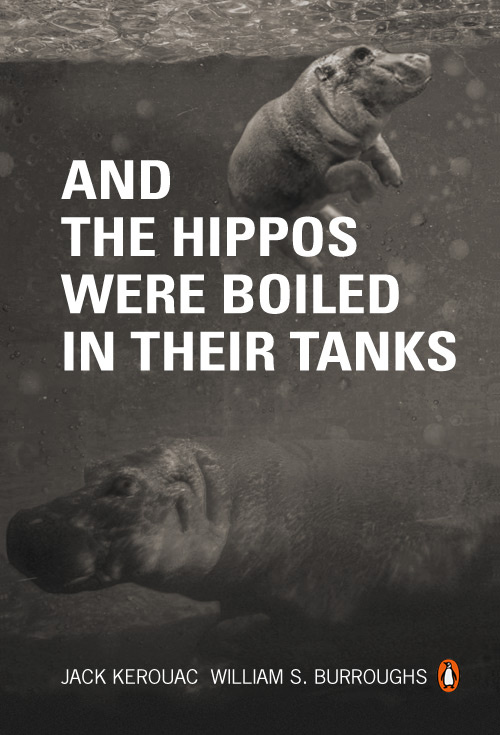
The work has been published and I’m a conflicted soul. Kerouac and Burroughs both felt the work to be sub-par and unworthy of publication but can’t very well argue from the grave now, can they? We selfish, living folk decided to go against the wills of two of the 20th century’s greatest creative minds and plublished their work posthumously. We trusted their judgement then, what happened? Pandora’s box has been opened and I feel that in owning this work I puts the blood on my hands, but in not owning it I would be missing out on that feeling of connectedness with something really special. The feeling I got sitting by Louisa May Alcott’s grave and experiencing the weight of history & utter loneliness bearing down on me whilst exploring West Kennet and its surrounding moors while chasing my Heathcliff. So do I put it on my wish list or do I honour their wishes and leave well enough alone? What’s a girl to do?
Oh, and if you’re interested you should check out what the always lovely Jaime The Nonist (RIP) has to say about it. He’s far more eloquent than yours truly. I have a huge nerdgirl crush on him.

Most of my inner circle knows that I harbour secret fantasies of being a cowgirl and have a penchant for anything with a tripped out country aesthetic…it’s why I’ve had a crush on Carl McCoy for so long. So it’s no wonder I couldn’t tear myself away from the second issue of Refueled after I came across it in some blog in my reader this morning. I’ve been poring over it for over an hour, reading every single word of every single article, soaking up all the slick and crunchy imagery. I’m in ‘zine lust. It is so super sexy I just want to live in its pages amongst all of those grungy and meticulously curated things.
You can read it at issuu here.
Or you can download it (in PDF format) here.
We’ve got two days left in this hellcat of a month and I’ll be happy to say ‘good riddance to bad rubbish’ once it’s over. I think this may have been the worst November I’ve experienced since I was 16 years old, which is saying alot as that was a horrible November.
Here are a few heartwarming things which I’m counting on to get me through the next couple of days:
– I just watched Wall*E. I know I’m a little late jumping on that bandwagon but I’m glad I finally did. It’s life-affirming on the same level as the Flaming Lips album Yoshimi Battles the Pink Robots is. Go watch it…again.
– I’ve got some employment prospects coming up which are promising. I’m crossing my fingers and toes.
– Sunday will be decorating and tree-trimming day. The sprogs have finally won out and I’m happy to give in.
– I’ve had a crazy amount of ideas lately and have been able to see a lot of them through to fruition. Teasers to come.
– the Free People Boutique has an amazingly cute holidays ’08 card available for downloading and printing. You can check it out here.
– I get to come home to a great family everyday. Can’t really beat that.
Ruffles have been inner than in for a few seasons now and I have to say I quite like that and they’re no likely to go away any time soon. Although I do argue that ruffles can go horribly, horribly wrong, I love that they’re being applied to just about everything for a fresher, softer, more romantic look. Everything in moderation, right?
Here are some favourite ruffly things, via etsy. Click the pics to go to the store:


Alright, nevermind the thing I said about moderation. This profusion of ruffles melts my heart:

…as does this one:

…and this one too:

Are you wearing ruffles? What’s your favourite ruffly thing?
Discuss. I’m going to go put ruffles on stuff. Possibly even the dog.
 cushti